
 1 / 7
1 / 7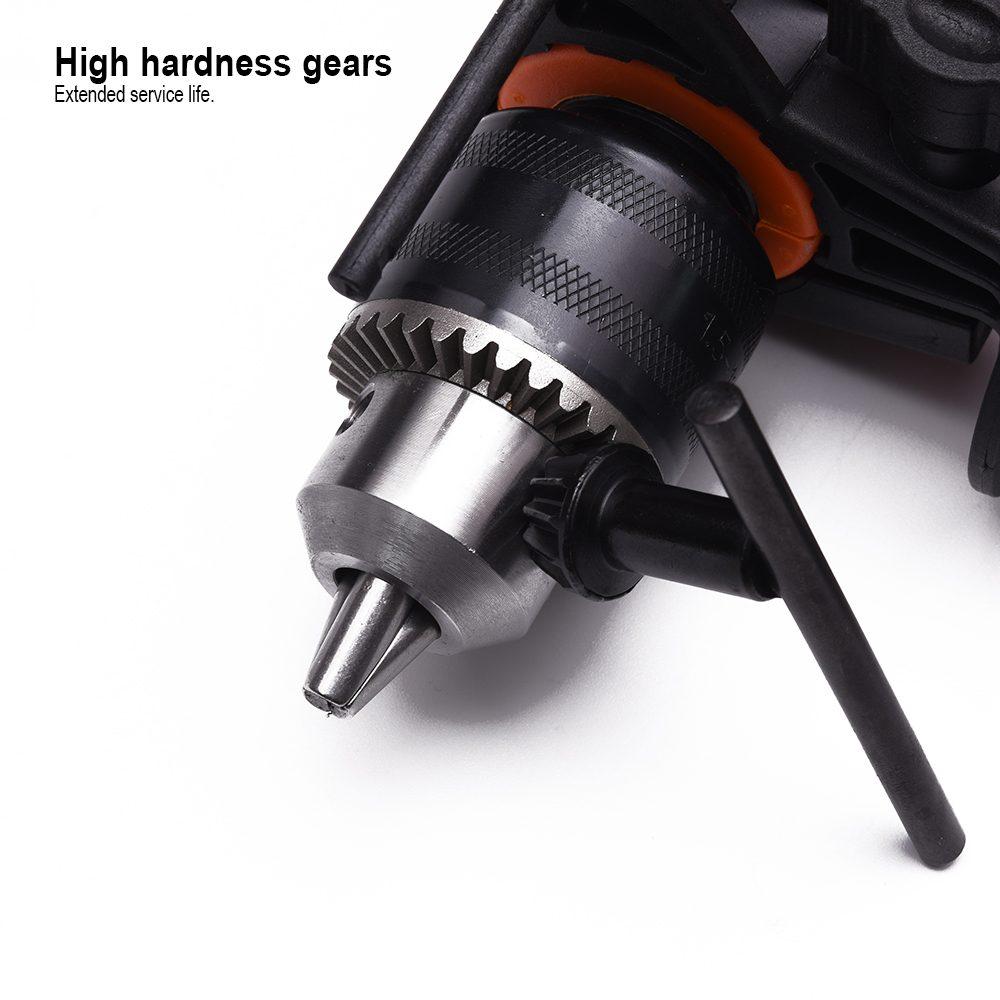
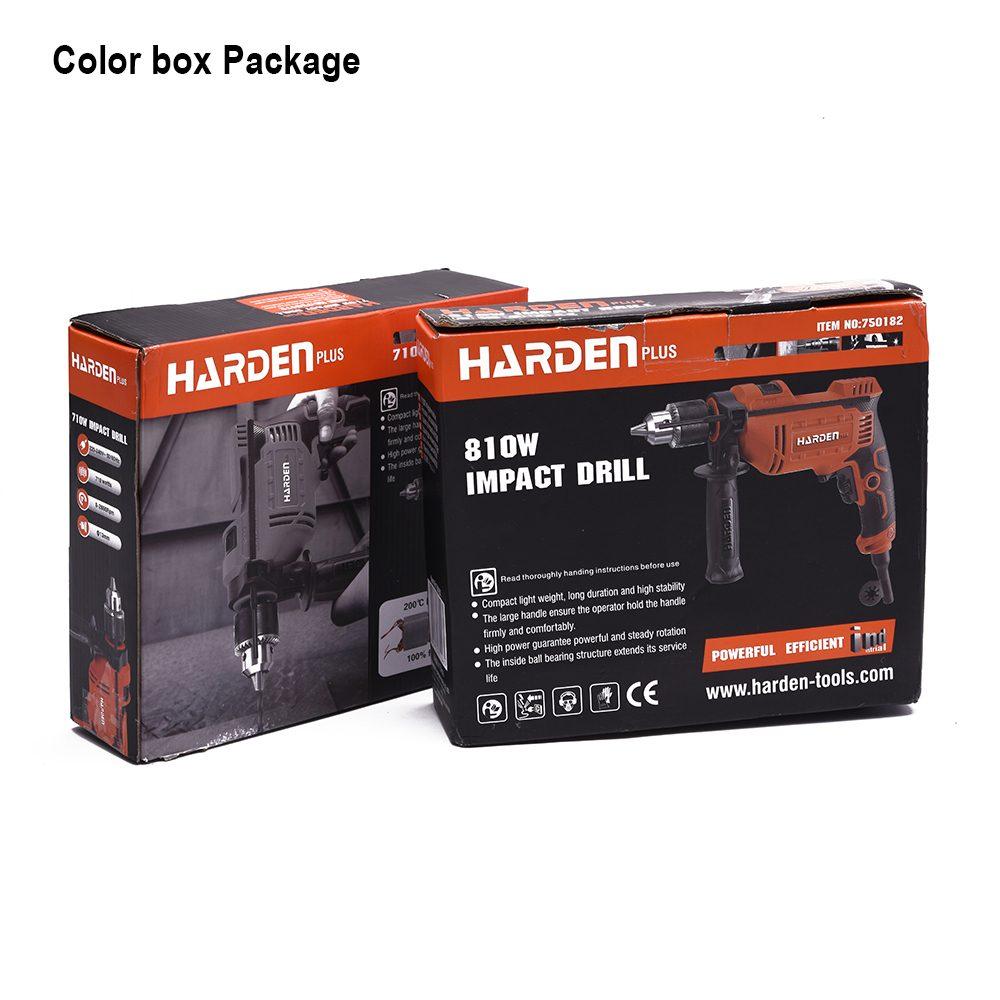
710W Impact Drill
Item No. 750171
Price on request
The first thing to settle on this drill is the supply, because it is not the usual one. The plate reads 110V, and Sri Lankan mains is 230V. Plugged straight into a wall socket it will not run — it needs a step-down transformer between the socket and the tool. At 710W on 110V the drill draws a little over six amps, so a modest transformer covers it, but it has to be there. Site electricians who already work with 110V gear will have one; if you do not, treat it as part of the purchase and we will quote you the pair together.
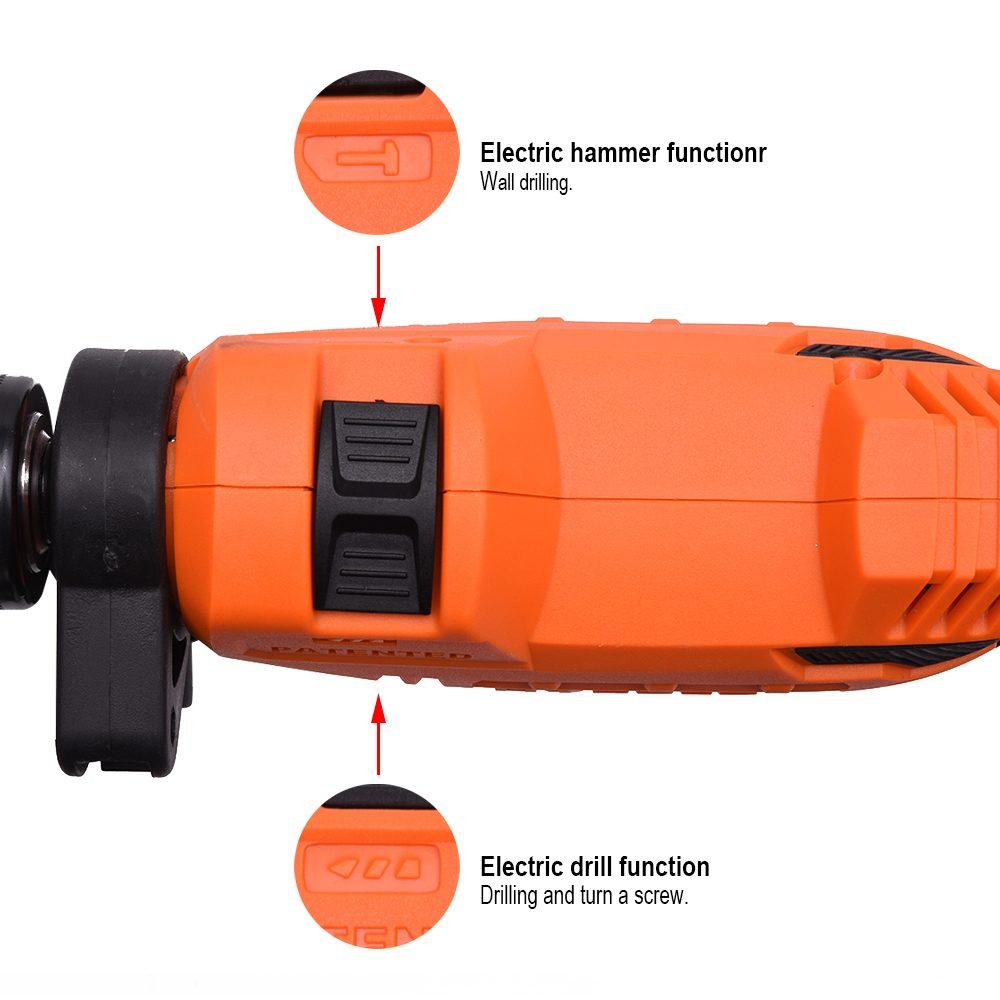
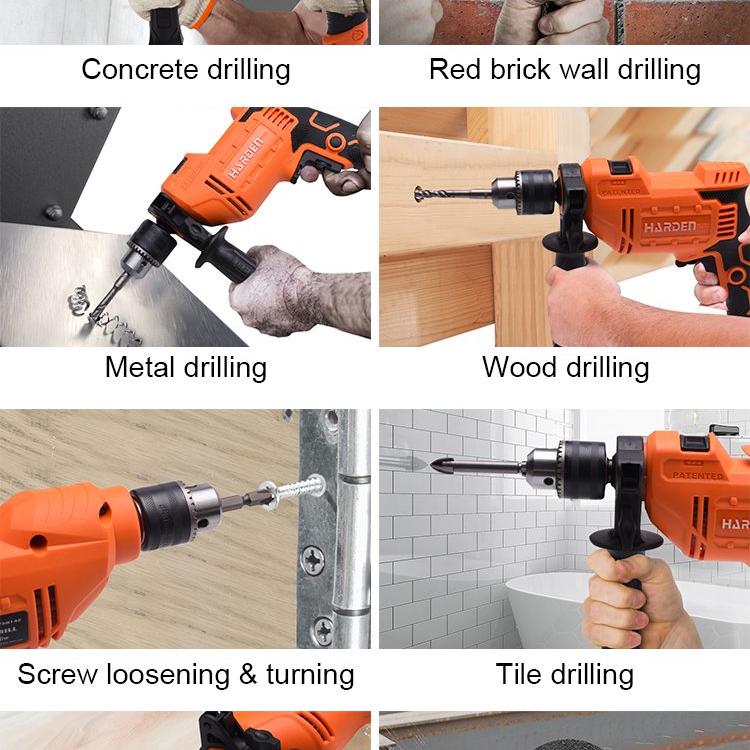
Past that, this is an impact drill, and the word impact is doing specific work. The chuck does not just turn — a pair of ratcheting discs behind it makes the whole spindle hammer forward thousands of times a minute while it spins. That is what lets a masonry bit chip its way into brick, block and light concrete instead of polishing a shiny hole in it. Switch the hammer action off and the same tool is an ordinary rotary drill for timber and steel, which is the reason this is the one drill most tradesmen own before they own any other.
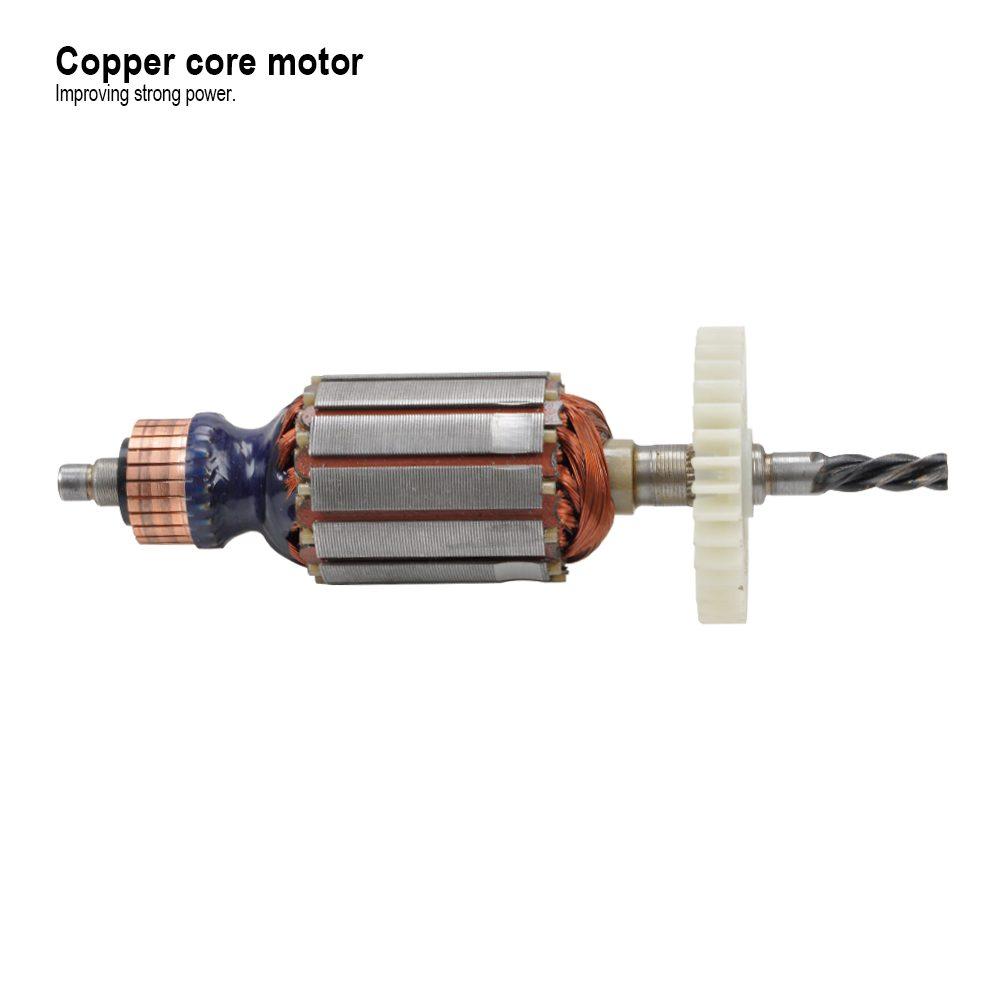
The motor is 710W and the no-load speed runs from 0 to 2800rpm on the trigger. That top speed is high, and high speed is what small-diameter bits want: 6mm and 8mm holes for wall plugs, conduit saddles and back boxes come out fastest up near the top of the range. The variable trigger matters just as much at the other end — starting slowly stops the bit skating across a glazed tile or a smooth render before it bites.
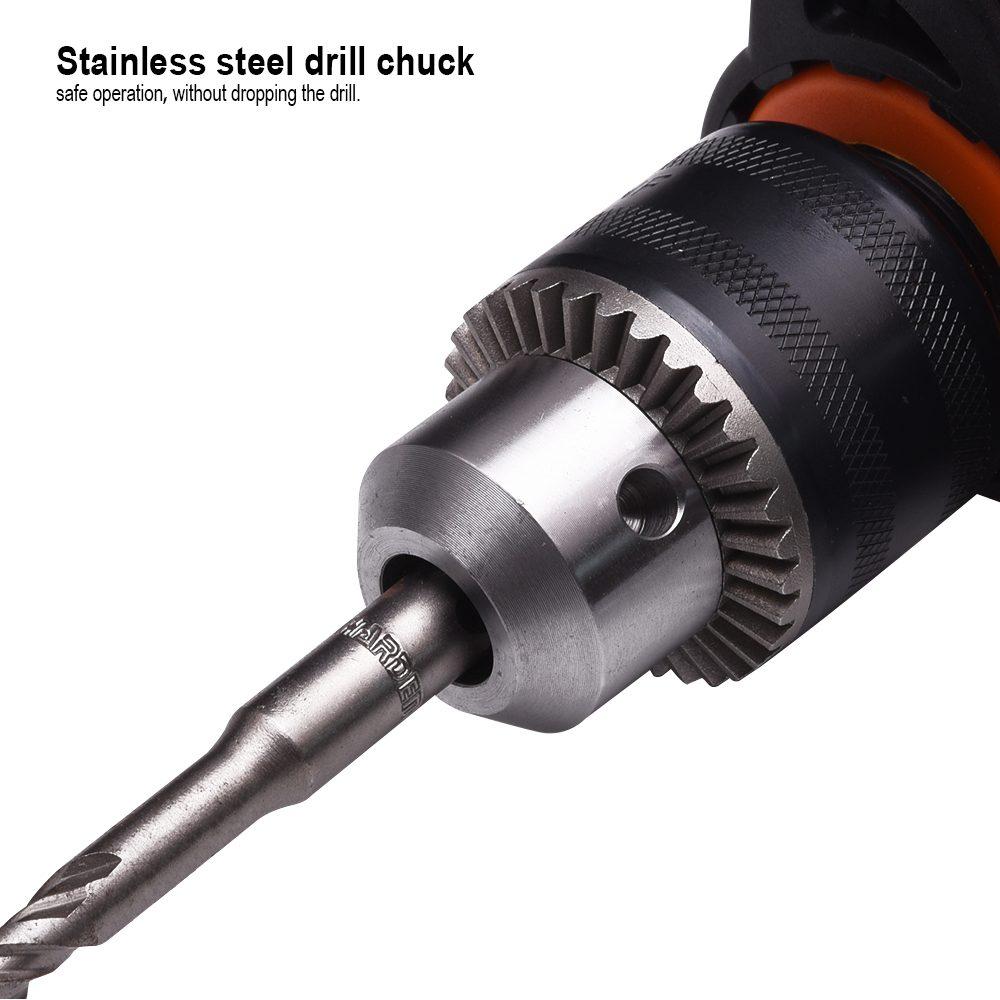
The chuck is 13mm and it is a keyed chuck, tightened with a key rather than by hand. On a hammer drill that is the right choice and not a cost saving: percussion work shakes a keyless chuck loose over a long day, and a slipping bit ruins both the bit and the hole. Keep the key on the cable and it is a non-issue.
Two accessories come in the box and both earn their place. The side handle is not optional on masonry — when a bit grabs on a stone in the block, the tool tries to spin instead of the bit, and one hand cannot hold it. The depth gauge is the quiet one: set it once and every hole in a run of fifty conduit clips comes out the same depth, which is the difference between plugs that sit flush and plugs that stand proud.
The buyers are electricians drilling for conduit and back boxes, building trades fixing frames, brackets and rails into block walls, and maintenance teams who need one drill that handles both masonry and metal. Hardware dealers sell it as the standard first power tool.
Use a proper masonry bit with the hammer on, and turn the hammer off for wood and steel — percussion on a twist bit wrecks the cutting edge. Message us on WhatsApp and we will price the drill together with a transformer to suit it.
Specifications
- 710W
- 110V
- 50/60Hz
- 0-2800Rpm
- 13mm
- Accessories: 1pc user manual / 1pc key chuck, 1pc side handle / 1pc depth gauge
Packing: 10 pcs per carton
Add it to your order and we'll confirm the price and stock, or message/call us right away — retail or trade.
Ask about this product
Leave your details and we'll get back to you — or reach us instantly on WhatsApp or by phone.
More power tools
View all →
Buying in bulk, or need a stock check?
Message or call us and we'll help you right away — retail or trade.