
 1 / 6
1 / 6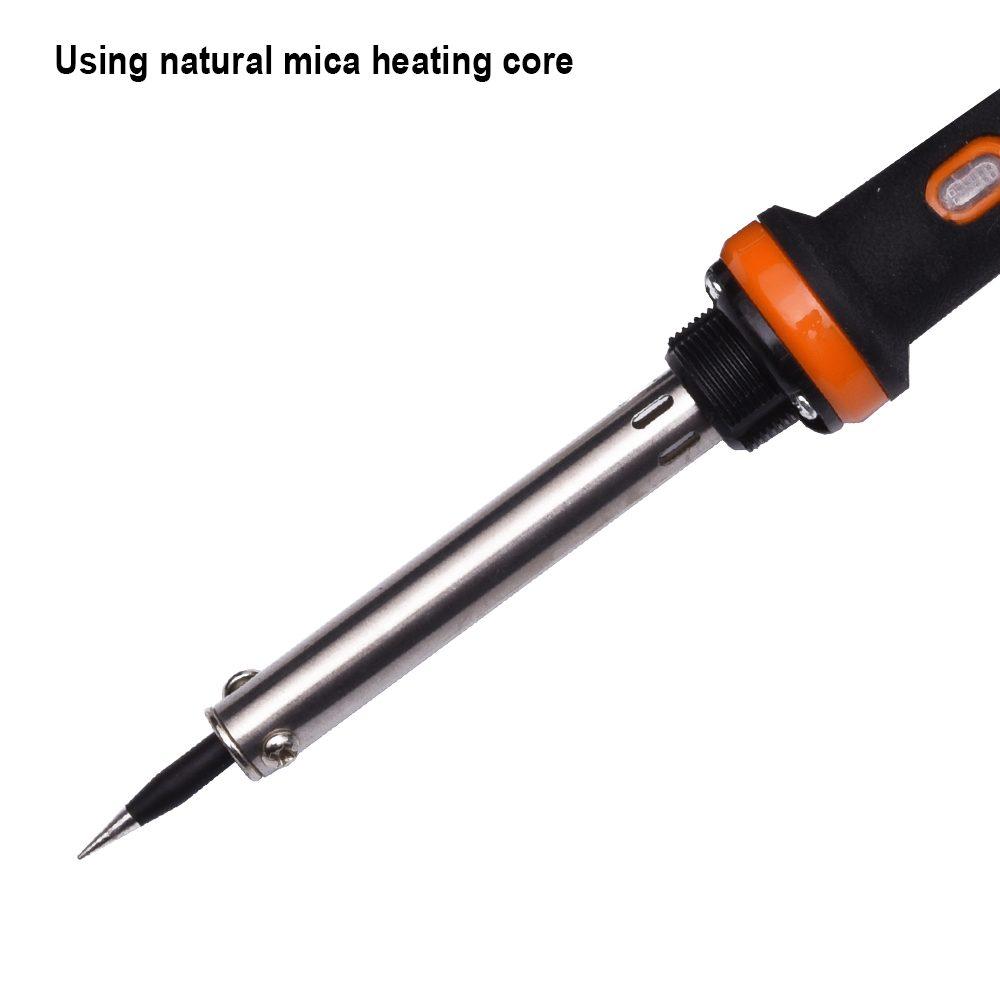
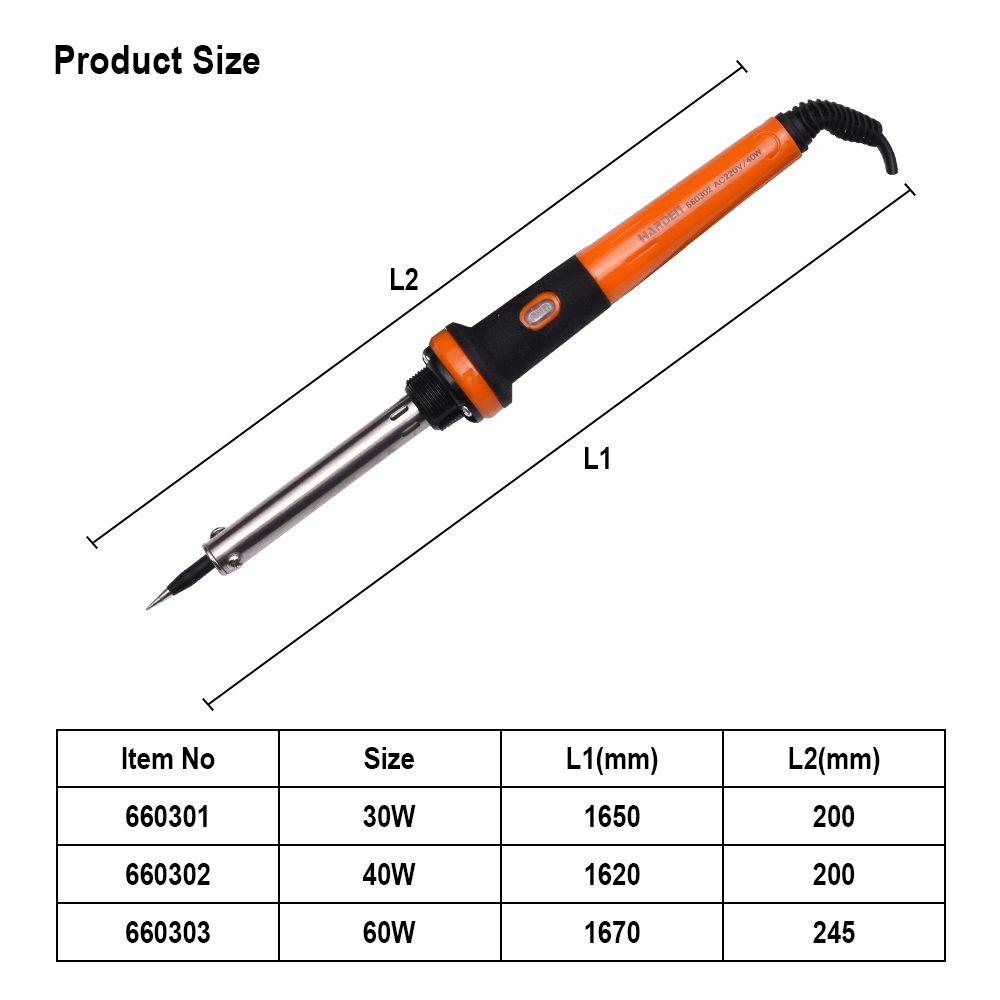
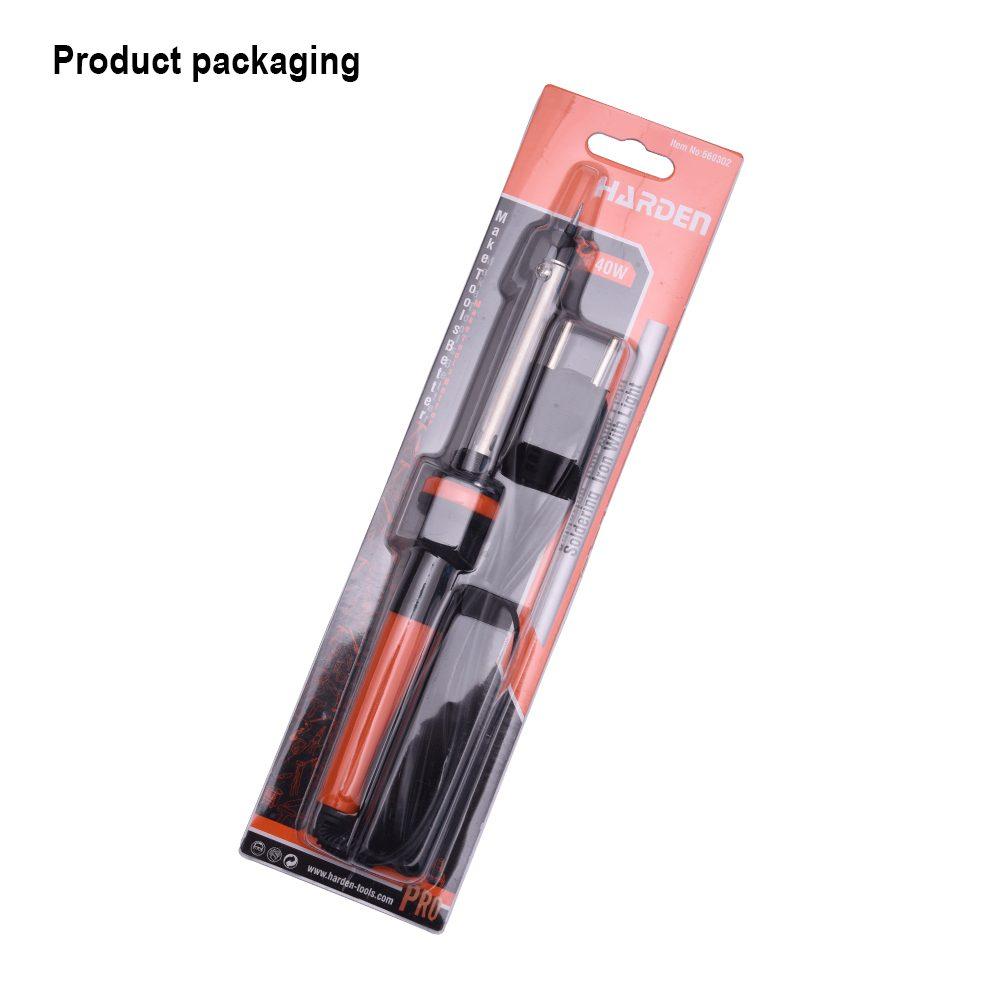
Soldering Iron With Light (60W/220V)
Item No. 660303
Price on request
Sixty watts is the general electrical soldering size, and understanding what wattage actually buys is the difference between good joints and a lifetime of bad ones. It is not temperature — the tip on a simple iron settles at roughly the same temperature whatever its rating. What wattage buys is recovery: how fast the tip pulls its heat back after a cold joint has drawn it away. Touch a small iron to a thick wire or a large terminal and the tip temperature collapses, the solder goes pasty instead of flowing, and you get a dull grey blob that looks joined and is not. That is a dry joint, and it is the single most common fault in amateur electrical work. Sixty watts has enough behind it for the joints an electrician actually meets — cable to terminal, wire to tag, connectors, motor and appliance leads, joints in flex.
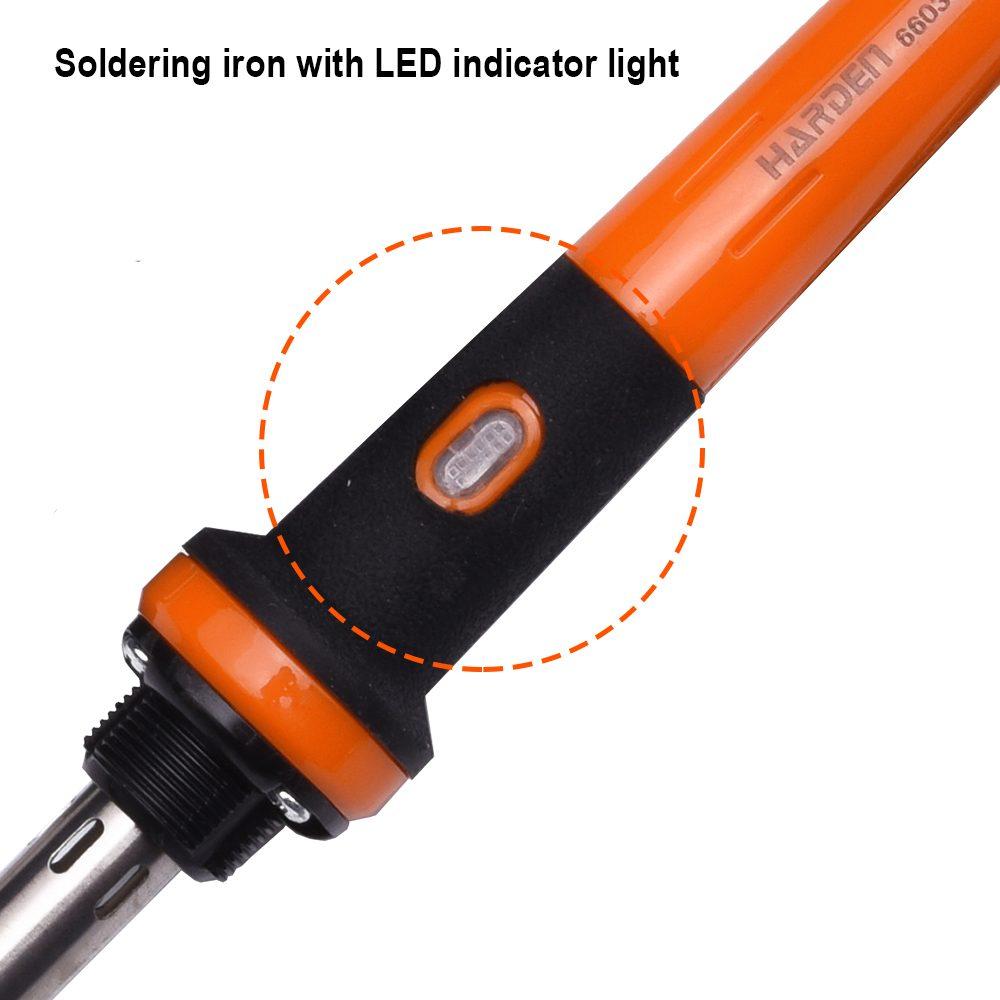
The built-in light is more useful than it sounds. Soldering happens in junction boxes, behind appliances, inside equipment and under dashboards, and a joint you cannot see clearly is a joint you cannot judge. Being able to see whether the solder has actually flowed and wetted the metal — bright and slightly concave, rather than sitting on top in a ball — is how you tell a good joint from a bad one, and that judgement is entirely visual.
The handle is thermo-plastic, which stays cool and comfortable in the hand through a long session, and the catalogue places it squarely as a tool for general electrical repair work in the workshop.
The buyers are electricians and electrical repair technicians, appliance and white goods repairers, vehicle auto-electricians, motor rewinders, maintenance departments, and hardware dealers supplying the trade.
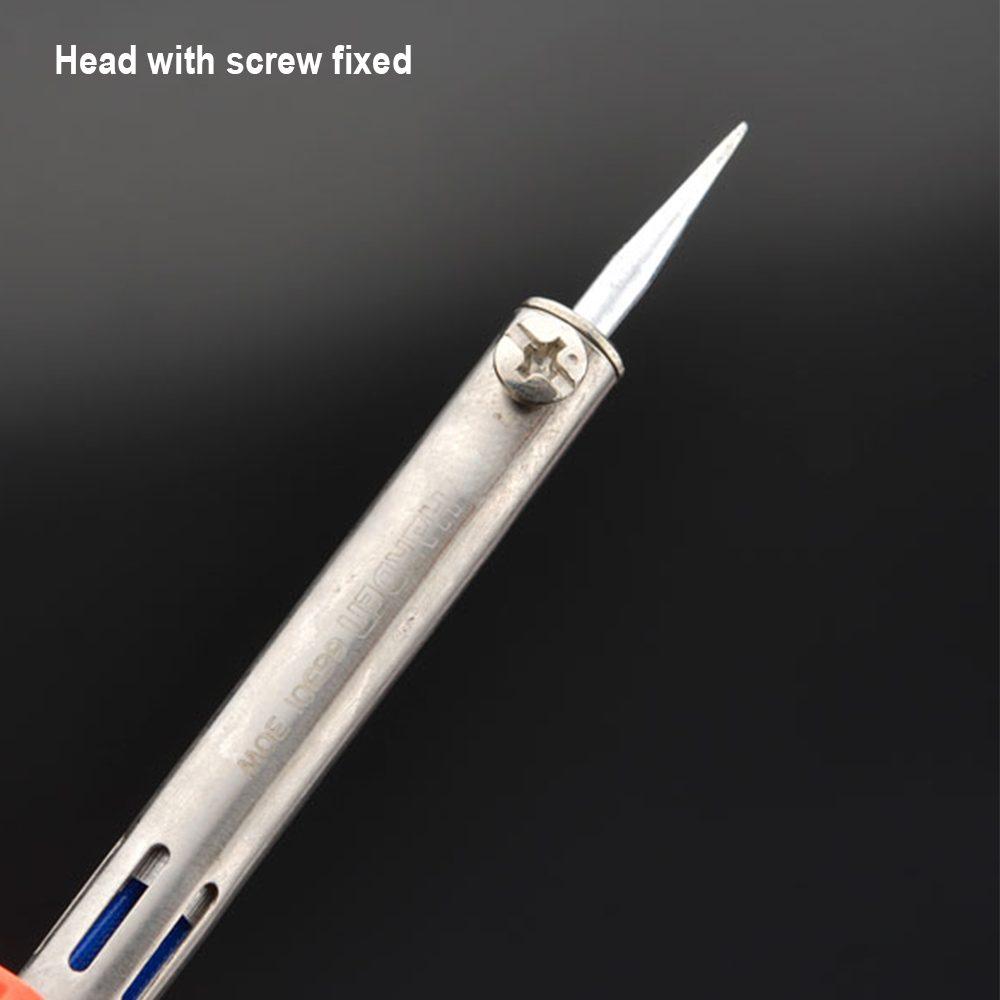
Getting good joints out of it is mostly about three habits. Tin the tip as soon as it is hot and keep it tinned — a tip left dry oxidises, goes dull, and stops transferring heat, at which point people blame the iron. Heat the joint, not the solder: put the tip against the wire and the terminal, let them come up to temperature, then feed the solder onto the joint so it melts on the work rather than dripping off the iron. And keep the joint still while it sets, because a joint moved while the solder is freezing goes crystalline and weak.
Clean the tip on a damp sponge, not on the bench. Never solder a live circuit. And if a joint is going to carry mechanical load or vibration, make it mechanically sound first — solder is a conductor, not a fastener. Ask on WhatsApp for a price, and for solder wire to go with it.
Specifications
- Thermo-plastic handle, safe and comfortable.
- For general electrical repairs in the workshop
Packing: 100 pcs per carton
Add it to your order and we'll confirm the price and stock, or message/call us right away — retail or trade.
Ask about this product
Leave your details and we'll get back to you — or reach us instantly on WhatsApp or by phone.
More electrical tools
View all →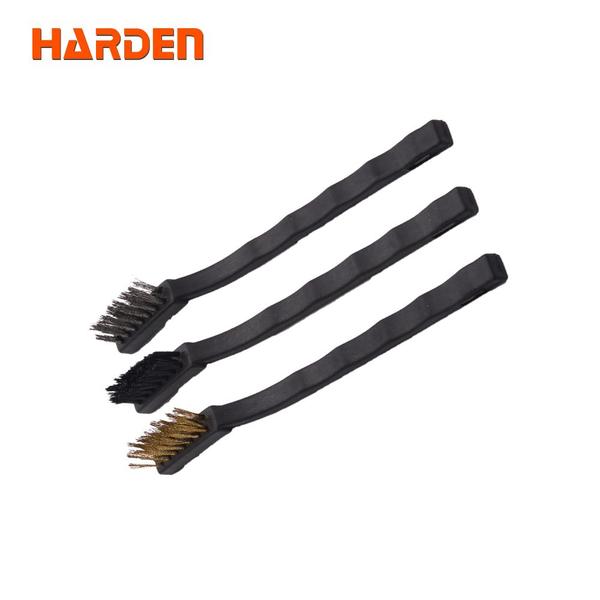
3Pcs Brush Set
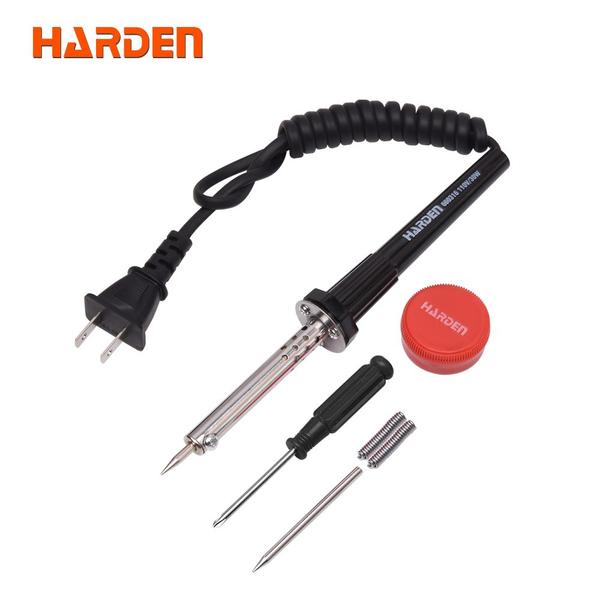
6Pcs Soldering Iron Set (30W/220V)
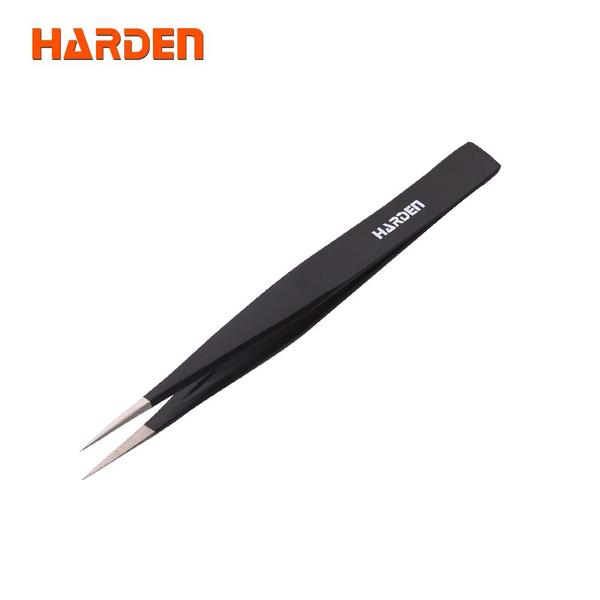
Anti-Static Stainless Steel Tweezer (125mm)
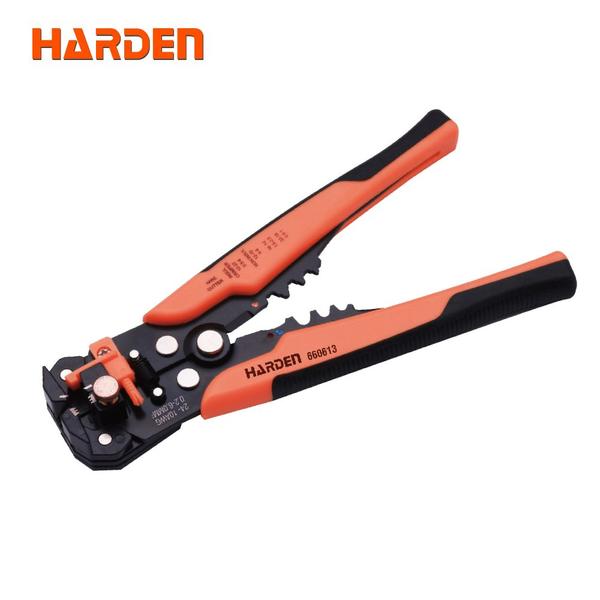
Automatic Wire Stripper (CS-55)
Buying in bulk, or need a stock check?
Message or call us and we'll help you right away — retail or trade.