
 1 / 6
1 / 6
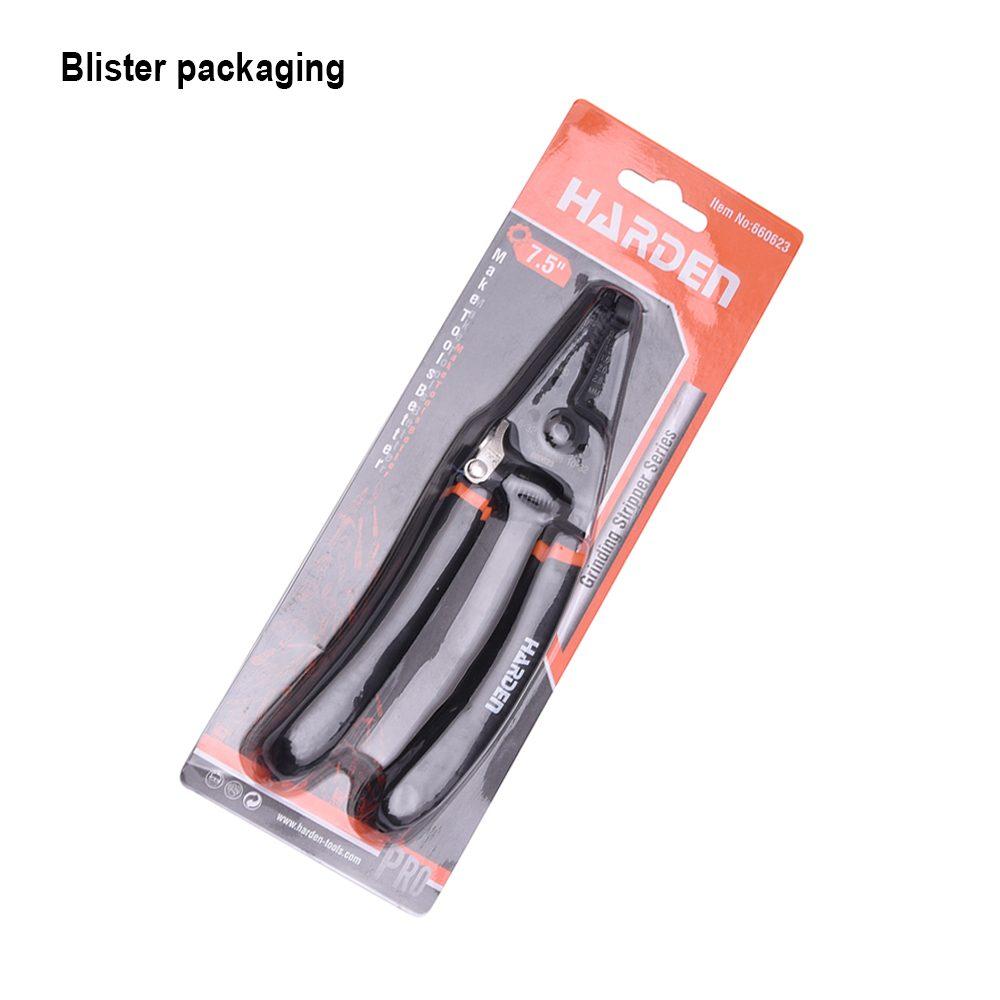
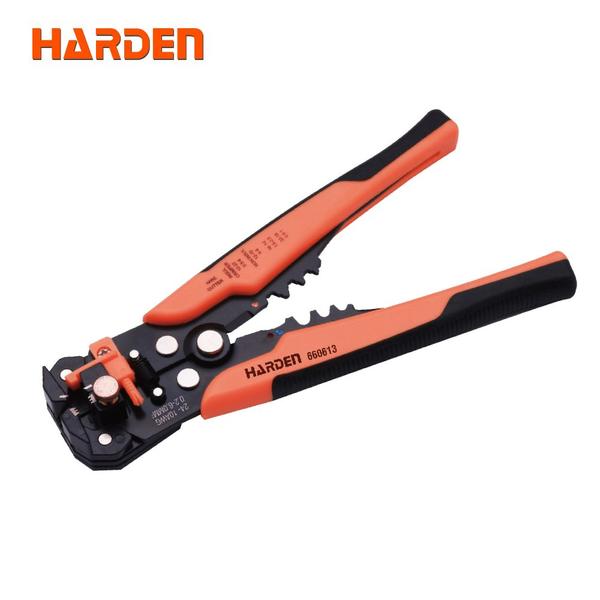
Grinding Stripper Series
Item No. 660623
Price on request
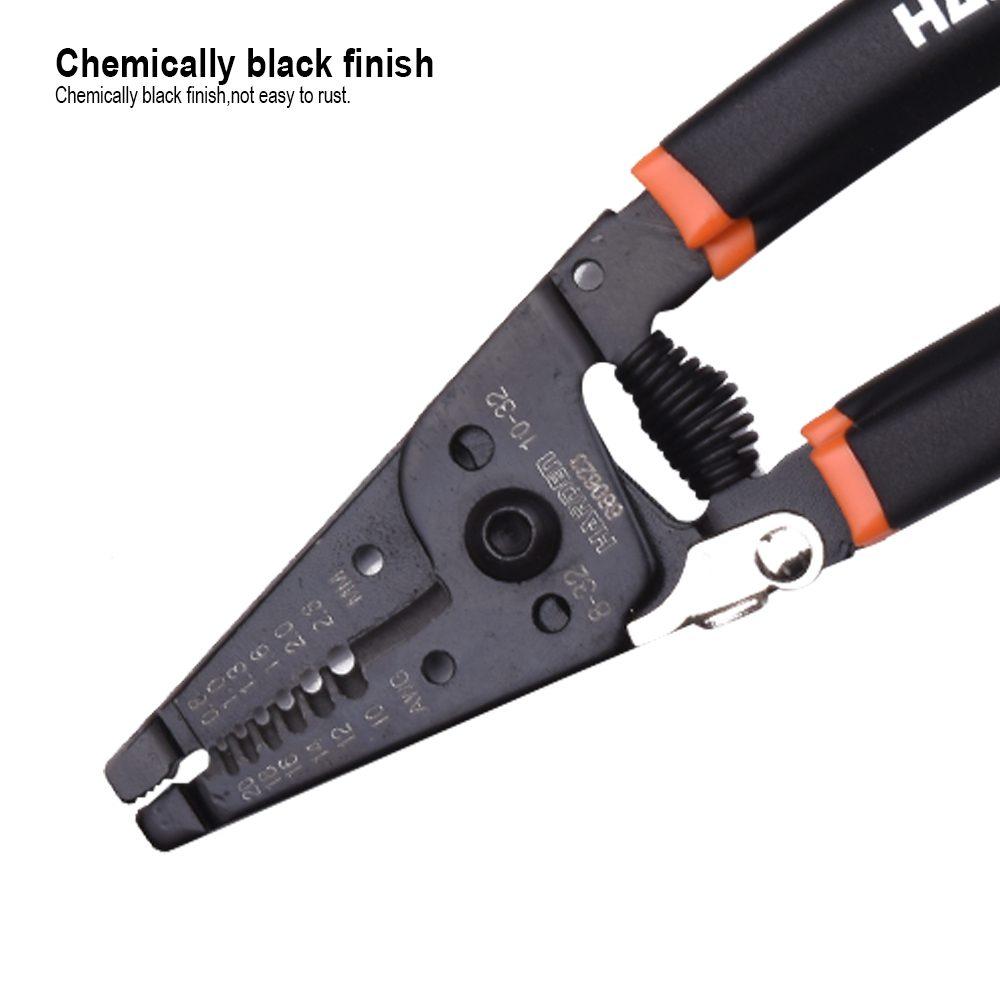
The interesting line on this tool is about the blades having tiny holes in them, and it describes a real change from the way traditional strippers are made. On a conventional stripper the stripping holes are formed in the jaws themselves, and the jaw is a compromise: it has to be a structural part and a cutting edge at once. Here the stripping holes are put through precise knife blades instead, so the cutting geometry can be made accurately and in properly hardened steel while the body gets on with being a body.
Why that matters comes down to hole accuracy. A stripping hole works by being very slightly larger than the conductor and very slightly smaller than the insulation, so it cuts the insulation and slides over the copper untouched. That tolerance is small. A hole punched or cast a little oversize leaves insulation attached; a little undersize and it scores the conductor. Ground blade holes hold that tolerance far better than formed jaws, and they hold it for longer because the steel around the edge is hard.
The catalogue is straightforward that this differs from a traditional stripper in being made of quality steel, giving both cutting precision and extended service life, and that is a fair summary of what the design buys.
The consequence for the user is a clean conductor, and that is not cosmetic. Copper that has been nicked carries the circuit's current through a reduced cross-section at that point, so it runs hotter than the rest of the run, and it is mechanically weak exactly where it will be bent into a terminal. The failures that produces show up long after the job — an intermittent fault that takes hours to find, or a terminal running warm inside a consumer unit, which is where a large share of electrical fires begin. A stripper that consistently leaves the copper untouched is a safety tool, not a convenience.
The buyers are electricians and electrical contractors, panel and control builders doing repetitive stripping to a fixed size, instrument and communications technicians, appliance and equipment repairers, and hardware dealers supplying the electrical trade.
Working notes. Match the hole to the conductor rather than to the look of the cable, and check the first strip by eye whenever you move to a new cable type, since insulation thickness varies between manufacturers even at the same conductor size. Pull straight rather than twisting the tool off, which is what tears insulation raggedly and drags on strands. Strip only as much as the terminal needs. And keep the blades clean — insulation and compound built up around a stripping hole changes its effective size, which is the usual reason a good stripper gradually stops cutting cleanly. Ask us on WhatsApp for a price.
Specifications
- Updated precise stripping knife blades has tiny holes
- Differ from traditional wire strippers, this product is made of quality steel, not only cutting precision, and extended service life
Packing: 60 pcs per carton
Add it to your order and we'll confirm the price and stock, or message/call us right away — retail or trade.
Ask about this product
Leave your details and we'll get back to you — or reach us instantly on WhatsApp or by phone.
More electrical tools
View all →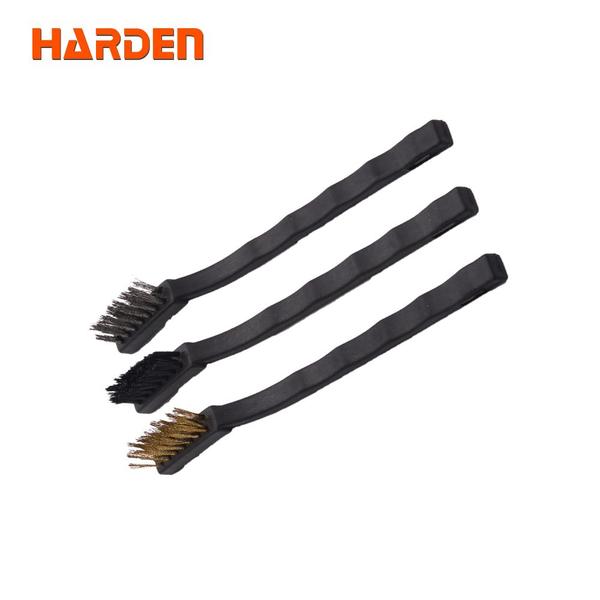
3Pcs Brush Set
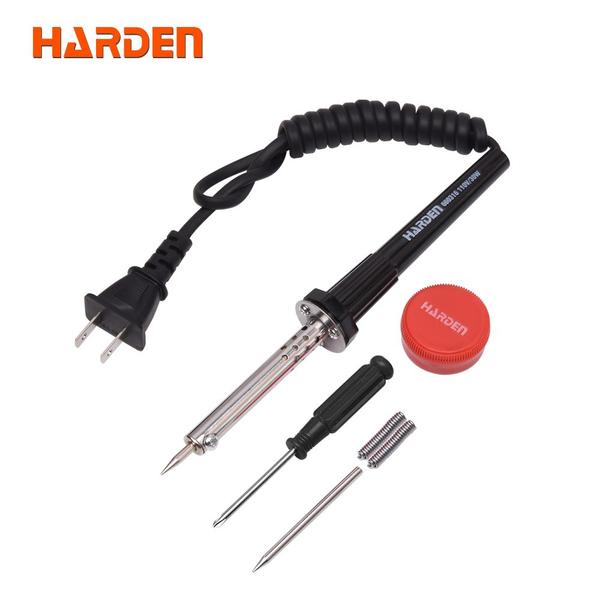
6Pcs Soldering Iron Set (30W/220V)
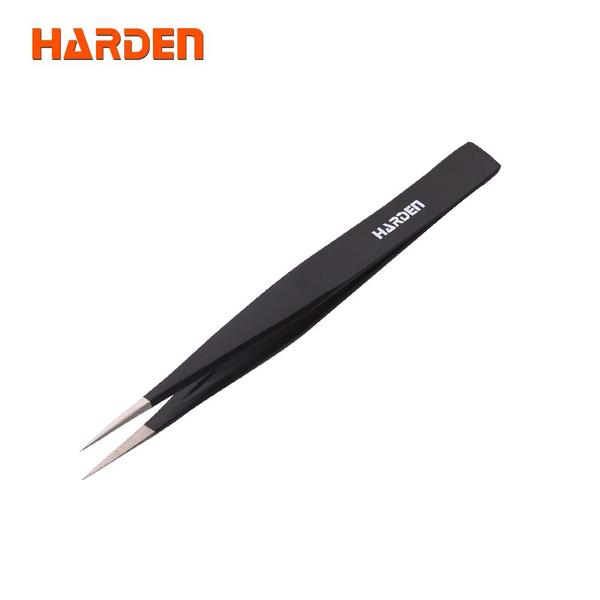
Anti-Static Stainless Steel Tweezer (125mm)
Automatic Wire Stripper (CS-55)
Buying in bulk, or need a stock check?
Message or call us and we'll help you right away — retail or trade.