
 1 / 6
1 / 6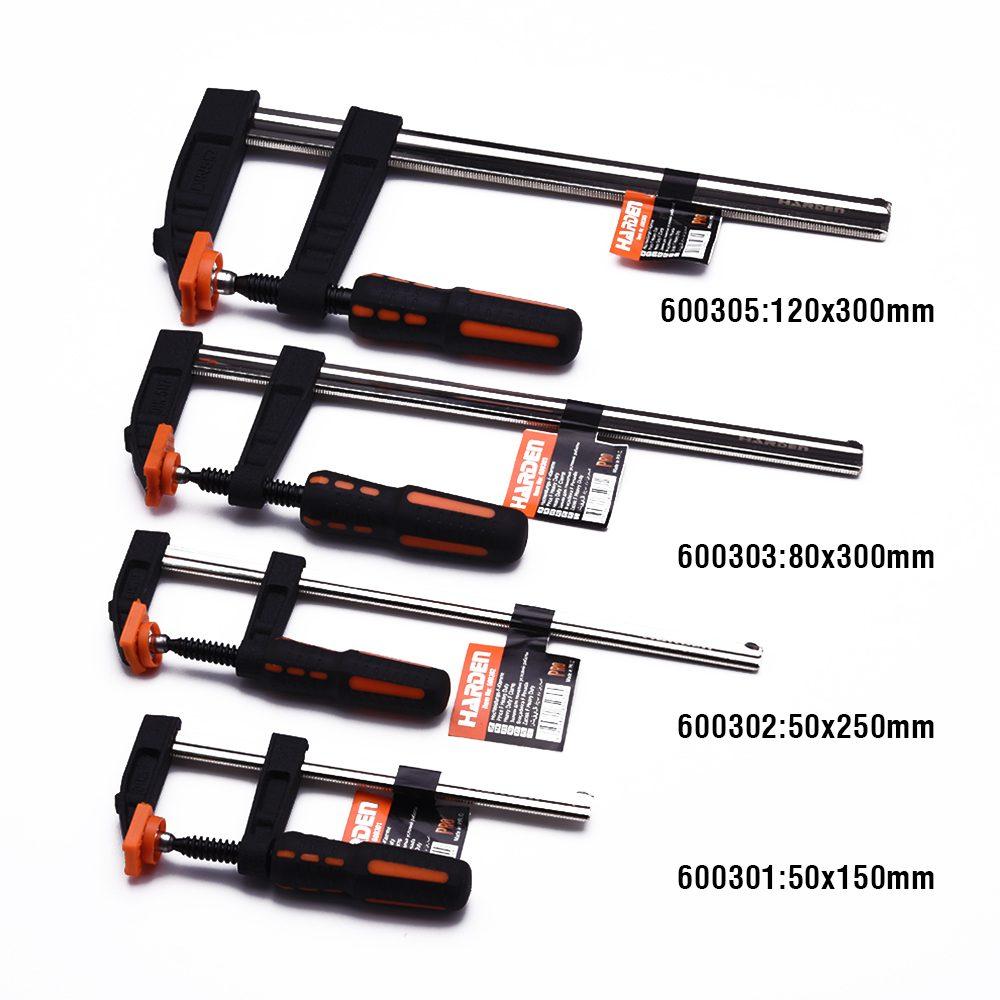
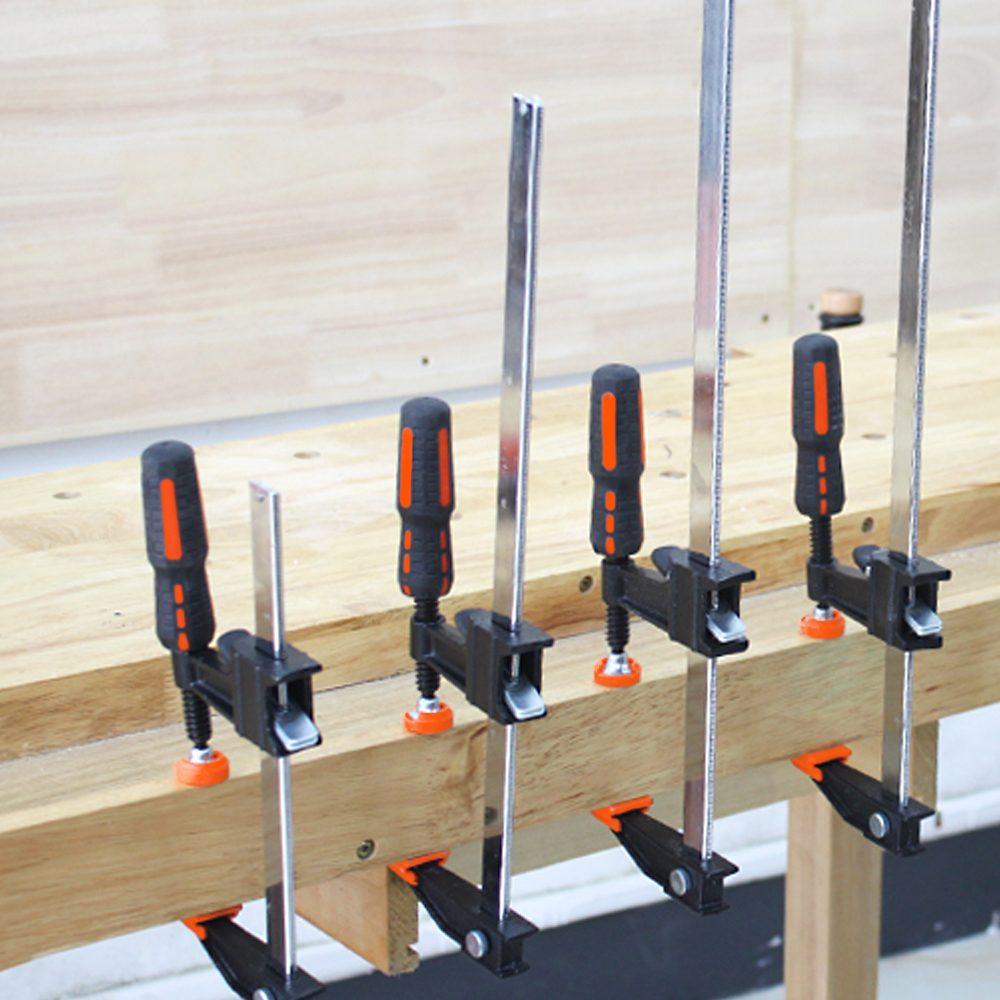
Heavy Duty F Clamp (50x150)
Item No. 600301
Price on request
An F clamp solves the problem that makes G clamps slow. On a G clamp, every millimetre of adjustment happens by winding the screw, so setting one onto a thick workpiece means a long spell of turning before you even reach the material. An F clamp splits the job in two: the lower jaw slides freely along the bar until it is roughly against the work, locks there under load, and then the screw only has to travel the last short distance to apply pressure. Fitting one takes a second or two instead of half a minute, and when you have twenty clamps to place that is the whole difference.
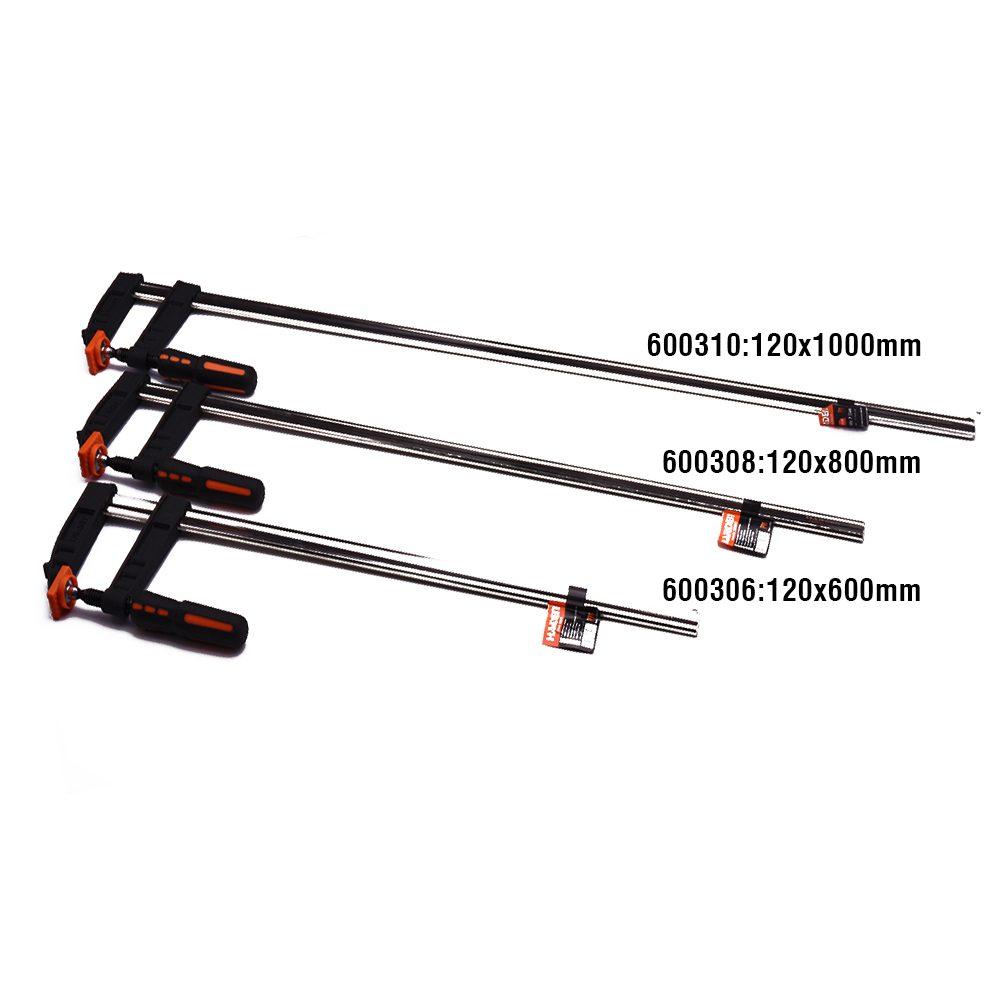
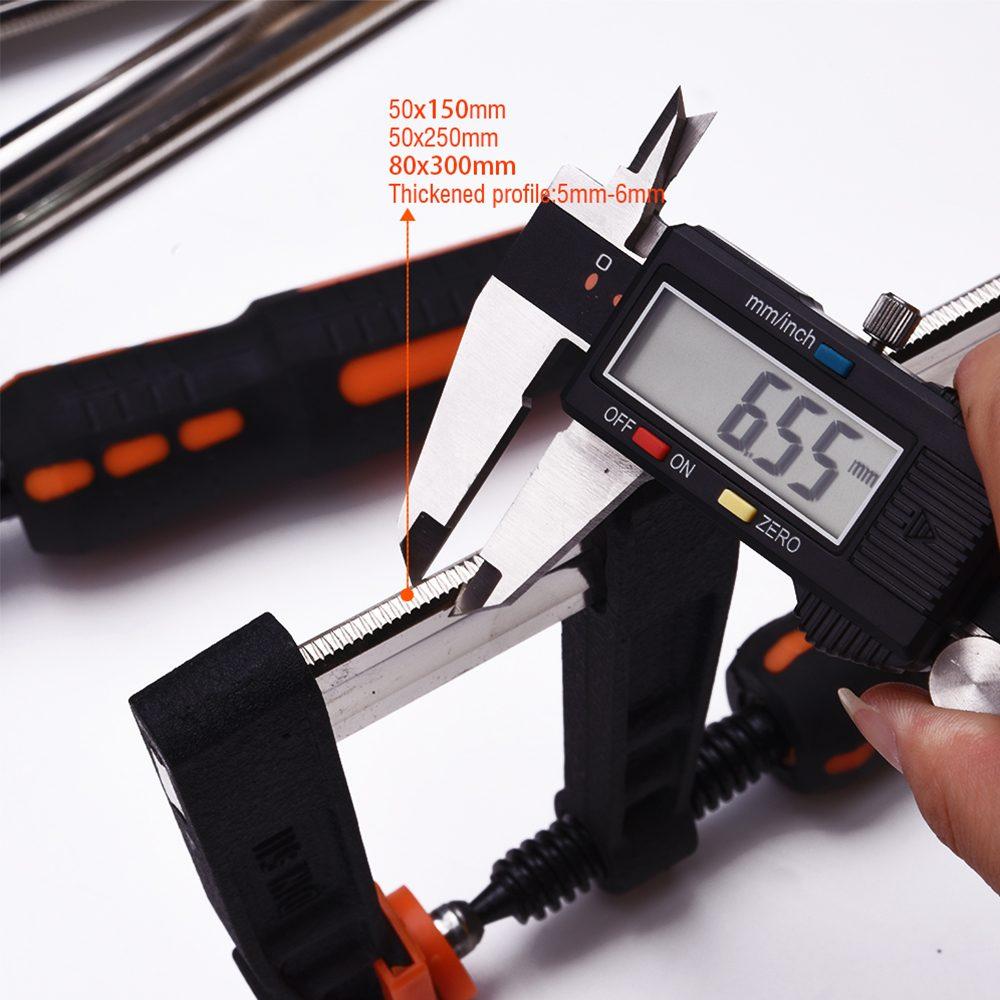
This is the smallest in the range at 50 x 150 — a 50mm throat and a 150mm opening. Those two numbers describe the tool completely and it is worth knowing which is which. The 150 is how thick a workpiece it will go around. The 50 is how far in from the edge of the work the bar allows the jaws to reach. Small on both counts, and deliberately so: this is the light, quick, get-it-out-of-the-way clamp for holding light stock, small assemblies, jigs and fences, and for the endless business of holding something still while a screw goes in.
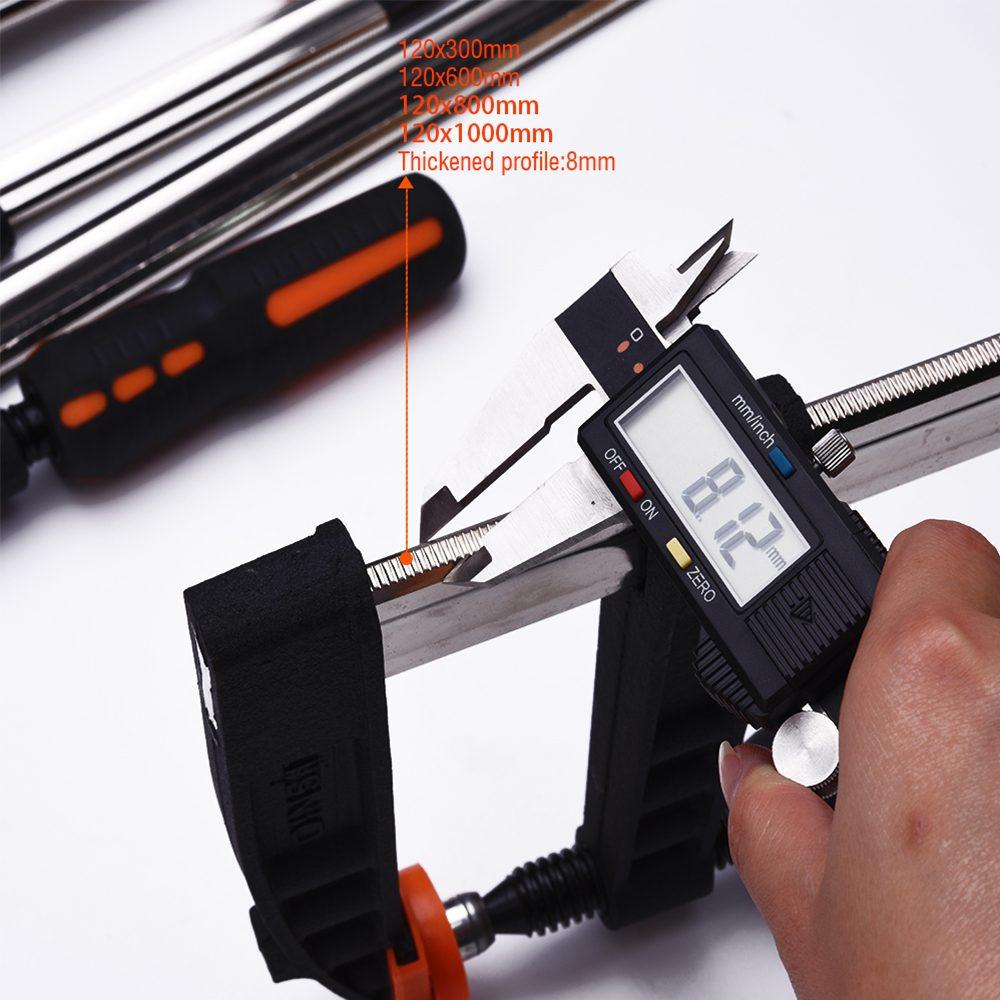
The bar is nickel plated, and that is a functional choice rather than a cosmetic one. The whole design depends on the lower jaw sliding easily along the bar and then gripping it hard when the load comes on. A bar that has rusted, even lightly, stops sliding freely and the clamp becomes worse than a G clamp rather than better. Plating keeps that surface right. The threaded spindle carries a black finish, and the handle is a two-component moulding — a rigid core for strength with a softer outer layer where your hand goes, which matters when a clamp is being tightened by hand many times a day.
The buyers are carpenters and joiners, shopfitters, cabinet and furniture makers, site installers fitting frames and trim, and maintenance workshops. Hardware dealers sell F clamps in far greater numbers than G clamps now, and this is the size that goes in a bag.
Use it well by letting the design do the work: push the sliding jaw up to the work by hand first, then tighten. Do not try to close a wide gap on the screw alone. Keep the bar clean and unpainted where the jaw runs, since paint or glue on the bar is what makes a sliding jaw skip under load. Wipe glue off before it sets. Ask us on WhatsApp for a price, or for a mixed set of sizes.
Specifications
- Nickel plated bar
- Black finished thread bar
- Two-component plastic handle
Packing: 50 pcs per carton
Add it to your order and we'll confirm the price and stock, or message/call us right away — retail or trade.
Ask about this product
Leave your details and we'll get back to you — or reach us instantly on WhatsApp or by phone.
More clamps & vices
View all →
Buying in bulk, or need a stock check?
Message or call us and we'll help you right away — retail or trade.